





 Published 19/02/2025
1. Introduction
In implementation of Cabinet Resolution No. (418) dated 25/7/1442 AH, issued regarding the approval of the establishment of the Digital Government Authority, and in accordance with Article (3) thereof stating that: "The Authority is the competent entity for all matters related to digital government, and serves as the national reference in this regard. It aims to regulate digital government activities across government agencies." As stipulated in Paragraph (5) of Article (4), which outlines among the duties and responsibilities of the Digital Government Authority: "Issuing measurements, indicators, tools, and reports to assess the performance and capabilities of government agencies in the field of digital government, as well as beneficiary satisfaction." Moreover, Paragraph (6) of the same article provides that the Authority is tasked with: "Monitoring the compliance of government agencies with decisions and directives related to digital government transactions, in accordance with the frameworks and standards set by the Authority." This report issued to present the results of the government agencies that participated in and were included in the 2024 Measurement Cycle. The evaluation was based entirely on the data submitted by government agencies to the Authority through the Measurement System. The results outlined in this report reflect the agencies’ adherence to the core standards of digital transformation.
2. Overview on Qiyas 2024
The 2024 Digital Transformation Measurement methodology was developed based on international best practices to keep pace with digital transformation developments, enhance performance effectiveness and innovation in the digital journey, and support government agencies in showcasing their efforts toward excellence. The methodology was based on the study and analysis of the 2023 Measurement Index standards. The first sub-index, "Standards derived from Royal Orders, Cabinet Resolutions, and Circulars," was integrated into the second sub-index, "Digital Transformation Standards." “Innovation in Digital Transformation” was also replaced with the “Research and Innovation” perspective. Following this integration, the 2024 Digital Transformation Measurement Standards Document comprises 10 perspectives and 23 axes. The number of standards was reduced from 125 in the 2023 Measurement to 96 in the 2024 Measurement.
The 2024 Measurement Cycle went through several phases, as illustrated in the figure below:

Digital Transformation Concept
Transforming and developing business models strategically to become digital models based on communication data, technologies, and networks.
What is Digital Transformation Measurement?
It is an evaluation process based on a specific methodology targeting government agencies. It aims to assess the company's current status and track the progress of its digital transformation journey in accordance with best practices and applicable standards, contributing to the achievement of the objectives of Saudi Vision 2030.
3. Objectives of "Qiyas"
Enhancing government agencies' compliance with orders and decisions.
Achieving digital transformation requirements through the optimal application of core standards.
Developing Digital Government.
Improving the performance and efficiency of government agencies.
Elevating the quality of services provided to beneficiaries.
Contributing to Saudi Arabia’s progress in international indices.
4. Mechanism for calculating Qiyas Index
The Digital Transformation Measurement Index consists of (10) perspectives, (23) axes, and( 96) standards, which include a set of required criteria used to assess the extent to which government agencies comply with the core digital transformation standards.
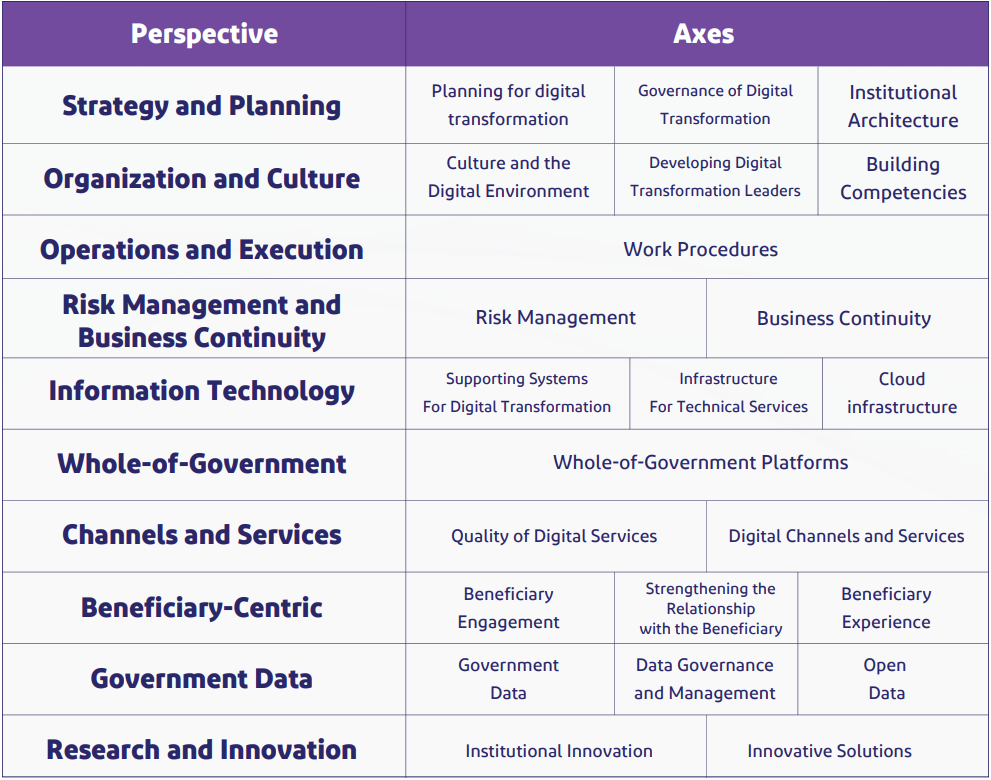
The Agency’s score is calculated based on its level of compliance across the 10 perspectives.
5. Levels of compliance with standards
Compliance with the standards is determined through three levels, including:
Full Compliance: It involves achieving all requirements for the application of the standard.
Partial compliance: Failure to meet one of the standard's requirements while achieving the remaining ones.
Non-compliance: Failure to meet two or more of the standard's requirements.
6. Criteria for Selecting agencies Included in Qiyas 2024
Based on the 2024 Measurement methodology, the Digital Government Authority established a set of criteria to identify the target group of agencies for measurement. These criteria include:
The Agency must be a government agency.
The Agency must have administrative independence and legal personality.
The Agency must be financially independent.
For newly established agencies created by the Council of Ministers, Agency is required that eighteen months have passed since their establishment.
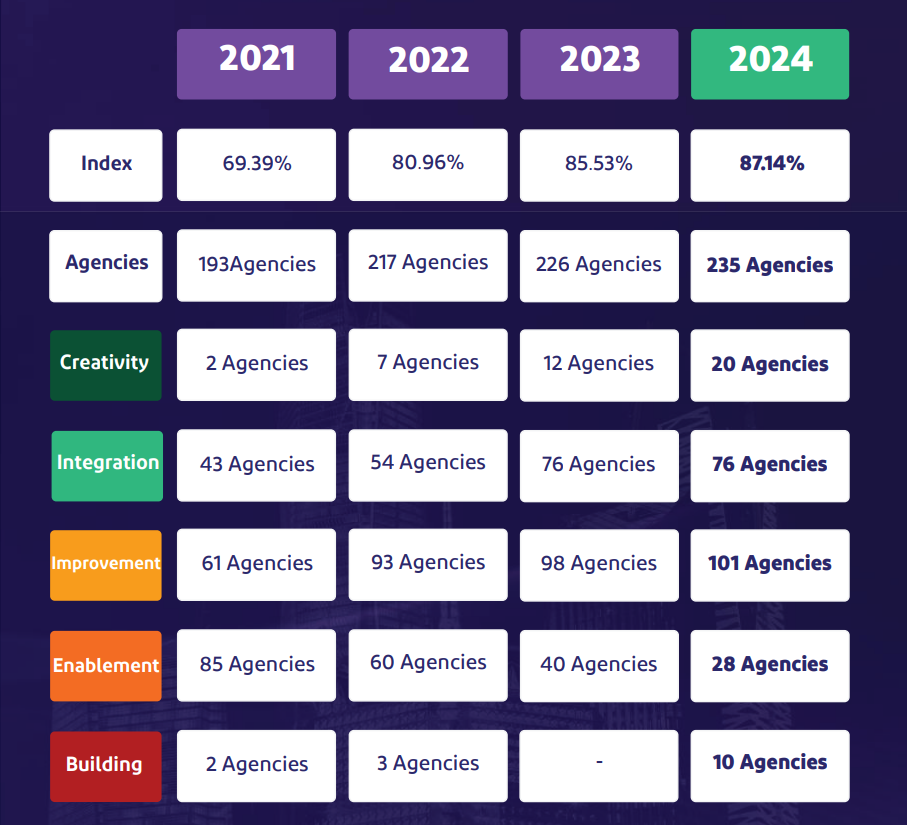
Accordingly, 235 government agencies were measured; 11 agencies participated for the first time in the 2024 Qiyas, and therefore, their results are not included in this report. The remaining 224 agencies are detailed throughout this report.
7. Classification of Government Agencies into Groups
As part of the enhanced framework for the 2024 Qiyas, the Digital Government Authority adopted a specific classification system. Government agencies were grouped based on the nature of their work and the services they provide to beneficiaries in a manner that ensures alignment and consistency. This classification enables effective and transparent comparison among these agencies.
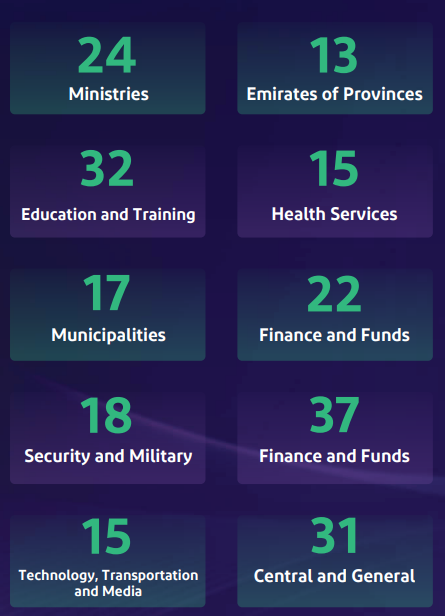
Digital Transformation Measurement in Numbers
Government agencies achieved a score of 85.53% in the 2024 Measurement, compared to 80.96% in 2022, reflecting a 4.57% improvement. The report below presents the results of the government agencies that participated in the 2024 Measurement, totaling 226 agencies. The evaluation results of these government agencies were as follows:
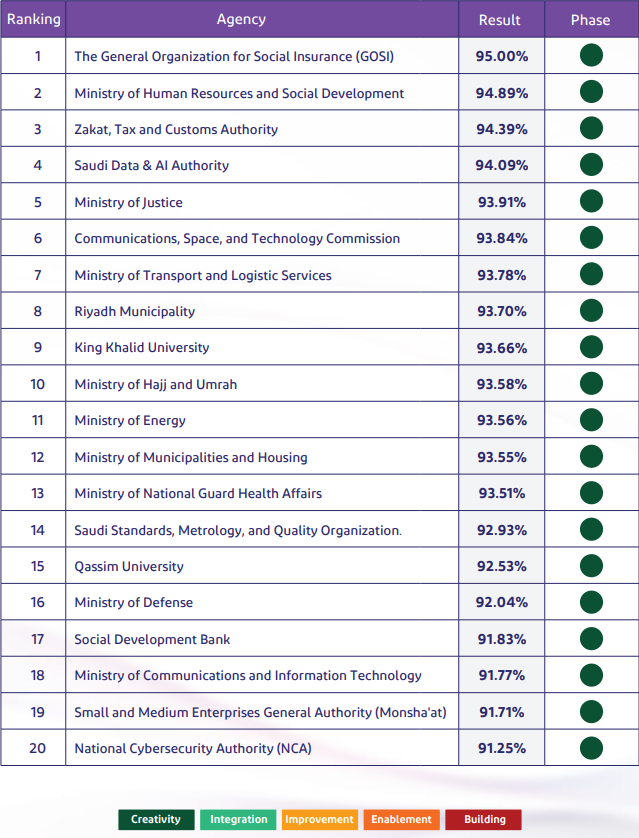
8. Top-Performing Government Agencies in the 2024 Measurement
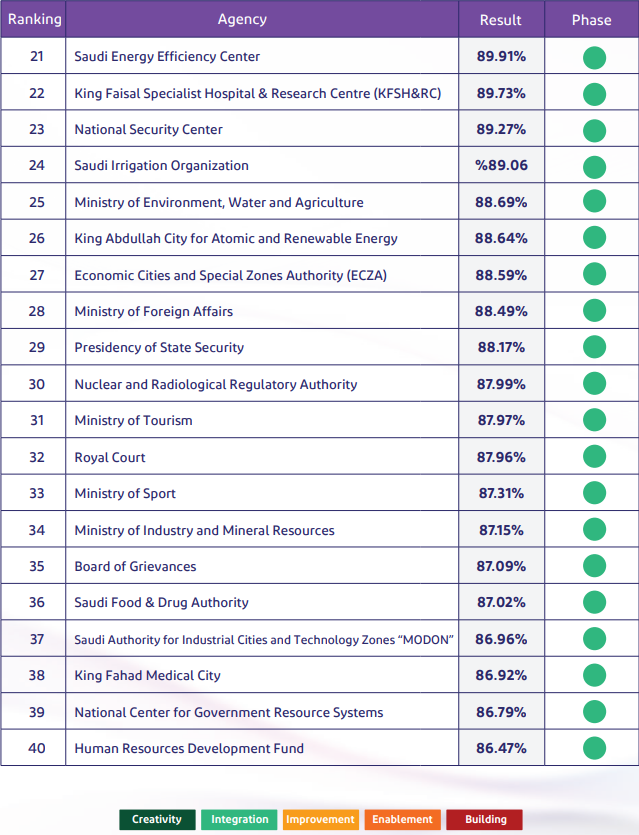
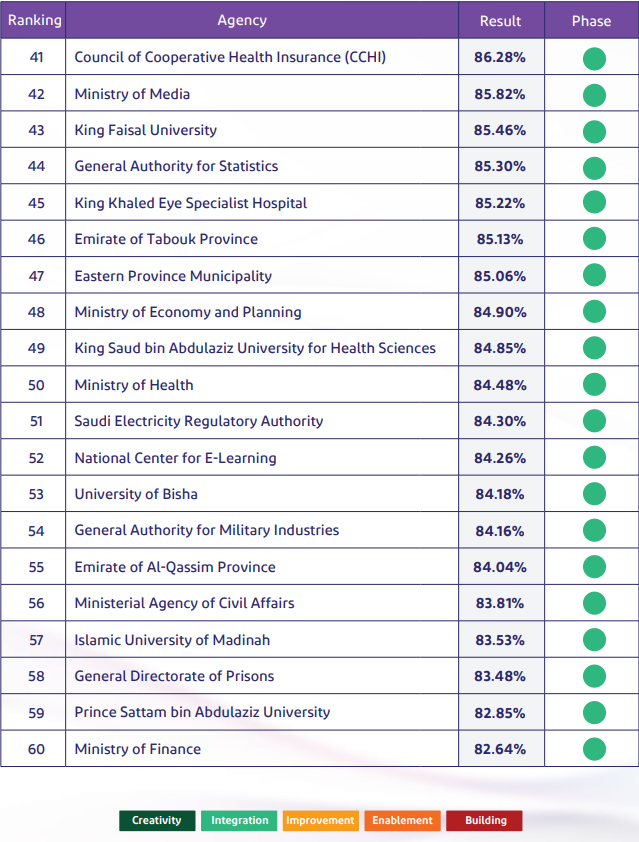
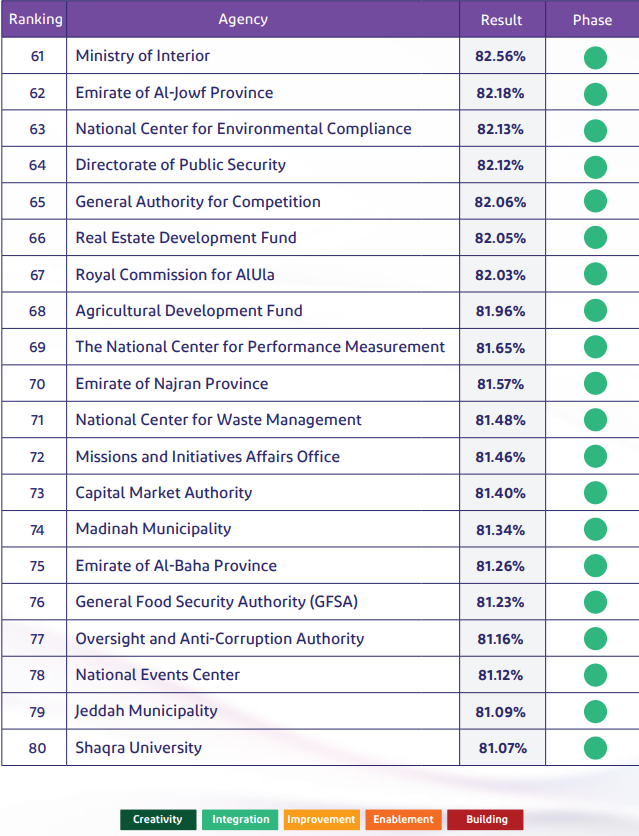
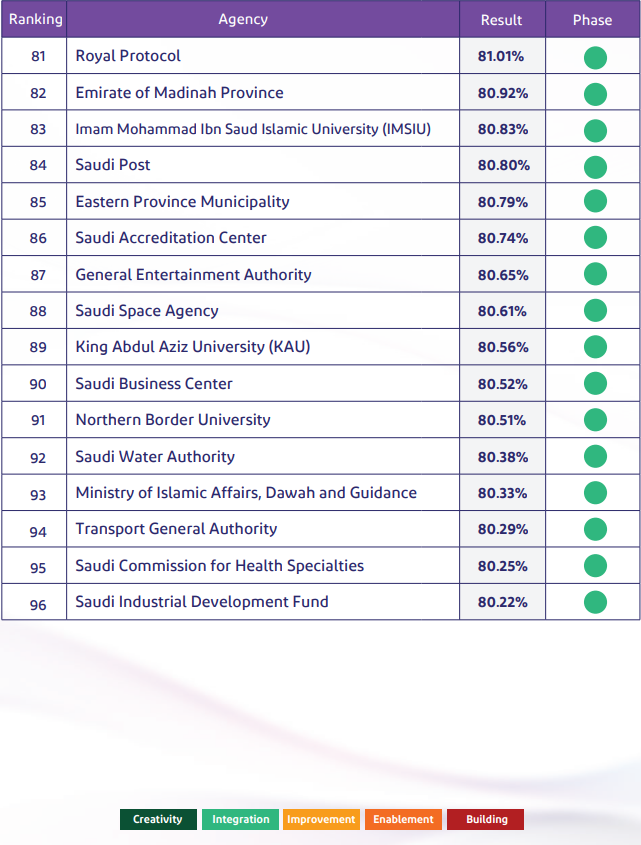
For more details, please click here to download the digital version.
Suggestions and comments
For any inquiries or comments about the services or the current page, please fill in the required information.
Add Comment