





 Published 11/09/2025
1. Introduction
Reference to the Council of Ministries Resolution No. (418) dated 25/07/1442 AH, of establishing the Digital Government Authority (DGA), and with reference to the fourth article, in its fourth and fifth Paragraphs of the Authority’s regulations which states that the Authority is mandated to “coordinate with relevant entities to organize the activities of digital government, digital government platforms, sites, and services, government networks, and the unified national portal. This includes the development of plans, programs, indicators, and standards related to the activities of digital government and shared digital government services," and "issue measurements, indicators, tools, and reports to measure the performance and capabilities of government entities in the field of digital government, and the satisfaction of the beneficiaries”.
As an extension of the Digital Government Authority’s responsibilities in enhancing the performance of government agencies, accelerating digital transformation, raising the quality of services provided to beneficiaries through platforms, and improving their digital experience in line with the strategic directions of the digital government, the Authority launched the Digital Experience Maturity Index for Digital Services for 2025, with the aim of measuring the level of maturity of digital government platforms and services.
The Objective of the Report
This report has been prepared to provide an overview of the Digital Experience Maturity Index for government services in 2025 .It begins with an overview of the index and its objectives along with an overview of the sub index related to Digital Inclusion, which was focused on in this cycle, with clarification of its importance in the digital experience. Moreover, it addresses the mechanism of enhancing and improving the index for this year ,in addition to reviewing the included Digital Platforms and their selection criteria.
It also indicates the four mains perspectives of the digital experience maturity and the themes emphasized by the index and its measurement mechanisms which are:
Beneficiary satisfaction
User Experience
Complaints Handling
Technologies & Tools
The report highlights the most prominent success stories that were achieved by government entities through their platforms in the areas of digital experience. It then overall results of the index for the year (2025), the (10) highest performing digital platforms, as well as the results of the digital inclusion sub-index and the most prominent advanced platforms. It concludes Key recommendations that will enhance the digital experience and achieve excellence in providing digital government services to beneficiaries in the Kingdom.
2. About the Maturity Index
2.1 Digital Experience
The digital experience encompasses the full range of interactions a beneficiary has with a government entity’s digital platforms and services, across all digital touchpoints and throughout the entire service journey — from the initial point of contact to post-service engagement. This journey begins at the first digital interaction channel, such as websites, digital portals, or smart applications, and continues through support systems and mechanisms for managing beneficiary feedback and complaints. It culminates in the analysis of beneficiary-provided data and inputs to enhance the quality of services, products, and digital channels.
The digital experience is shaped by several interconnected core elements that collectively contribute to building a comprehensive and effective user journey. These elements include:
- User-centered platform and service design ensuring intuitive navigation and ease of finding information, with essential functionalities that enable beneficiaries to complete their tasks and achieve their goals with minimal effort.
- Personalized experiences tailored to user preferences and needs considering the diversity of user groups including seniors and persons with disabilities to ensure digital inclusion.
- Effective engagement with beneficiaries through prompt responses to feedback and complaints and by encouraging beneficiaries to take part in the design and development of digital solutions.
Delivering a mature digital experience plays a key role in accelerating digital transformation, enhancing quality of life, and improving beneficiary satisfaction. Moreover, a seamless digital experience motivates beneficiaries to engage positively with platforms and make consistent use of their services and offerings, amplifying the overall impact of digital transformation on individuals and society.
2.2 Digital Experience Maturity Index (DXMI)
The DXMI is an annual index designed to measure the maturity of the digital government platforms and services based on several measurable perspectives and themes. This index stems from the importance of the digital experience and its pivotal role in accelerating digital transformation, meeting the needs of beneficiaries, enhancing the quality of digital government services, and increasing beneficiary satisfaction. It also supports efforts to develop these platforms and services and to enhance the user experience. The index serves as one of the enablers to achieve the strategic directions of the digital government by analyzing its results, identifying themes that may require maturity enhancement, and providing recommendations for improvement. Additionally, the annual index sheds light on most maturity government digital platforms and services, which can be considered national success stories and learn from their experiences and business models.
To ensure alignment with modern digital experience trends, changing beneficiaries' needs and their aspirations, the methodology of the index is reviewed in each cycle according to the latest international practices and strategic trends of digital government. This is done to enhance the exchange of success stories and disseminate valuable insights.
2.3 Objectives of Digital Experience Maturity Index
The Authority aims to achieve the following objectives through the index:
- Keeping pace with the National Digital Government Strategic Directions.
- Raising the maturity of government digital platforms and services.
- Establishing DX maturity measurement practices based on the best international standards
- Enhancing the digital experience of beneficiaries and improving their satisfaction.
- enhancing comprehensive access and effective use of digital services for all segments of society, including people with disabilities, with the
- aim of improving their satisfaction levels.
- Accelerating the digital transformation of government digital platforms and services.
The Digital Experience Maturity Index (DXMI) also contributes to several national goals that are part of the Digital Government Strategic Directions. DXMI creates a positive impact on the digital transformation journey in the Kingdom, through:
- Quality of Life: Improving the quality of life of beneficiaries by presenting digital effective governmental services
- Beneficiary satisfaction: Raising the percentage of beneficiaries highly satisfied with digital government services.\
- Business Practices: Contribute to enhancing competitiveness and the ease of doing business
- Digital Government Transformation :Improving the performance of government entities, enhancing the digital transformation of government entities and improve decision making.
- Sustainability and Environmental Impact: Reducing CO2 emissions based on digital solutions.
- Community Participation: Improving beneficiary participation in public decision-making and designing digital government services.
- International Indicators and Digital Competitiveness: Achieving a leading figure in the EGDI rankings.
2.4 Digital Inclusion
Digital inclusion is the commitment to designing and developing digital services, platforms, and content in ways that ensure equal access, usability, and benefit for all segments of society including persons with disabilities and the elderly. This is achieved through the adoption of approved standards, technologies, and mechanisms that promote social equity and equal opportunity. Achieving digital inclusion is a foundational pillar for strengthening digital equity and independence, ensuring that no societal group is excluded from the digital transformation journey.
Adopting the principle of digital inclusion contributes to achieving a range of strategic benefits:
- Promoting digital equity by narrowing the digital gap among all segments of society in accessing government services.
- Enhancing the efficiency of using government platforms and services by ensuring the right to easy and accessible usage for all beneficiaries.
- Supporting the economic and empowerment of targeted groups through their full and fair inclusion in the digital ecosystem.
- Improving quality of life by ensuring all beneficiaries can independently access essential services such as education, healthcare, employment, and all government
services. - Increasing beneficiary satisfaction with digital services and encouraging greater adoption and use of digital channels.
- Achieving alignment with national strategic directions and international indicators in the fields of digital transformation.
Digital inclusion is gaining increasing importance amid the accelerating pace of digital transformation. Ensuring the participation of all segments of society including persons with disabilities and the elderly, as stipulated by relevant national regulations is a fundamental prerequisite for achieving social equity. It also plays a key role in maximizing the benefits of digital solutions in expanding access to economic, educational, and public service opportunities.
2.5 The Digital Inclusion Sub-Index
Based on the adoption of best practices in designing government digital experiences, and in recognition of the critical role of digital inclusion as a foundational pillar in building a comprehensive and equitable digital experience, the Digital Government Authority has, starting with 2025 Cycle, introduced Digital Inclusion as a sub-index within the broader Digital Experience Maturity Index (DXMI). The sub-index derives its criteria from the main index by identifying the specific perspectives and themes that directly support digital inclusion. This approach reflects the strategic importance of ensuring that all segments of society have equal, independent, and effective access to digital government services—ultimately reinforcing the principles of digital equity.
This strategic focus is driven by several key considerations, most notably:
- People with disabilities and the elderly are considered an important sector of society, which necessitates focused efforts to enable them to independently participate in digital government services.
- Enhancing the digital experience of government platforms and services for all segments of society, improving service quality and user satisfaction.
- Ensuring equitable, meaningful, and safe access and use of digital technologies and opportunities for everyone, everywhere.
- International indicators (such as OSI, EPI, GEMS, and DARE) emphasize digital inclusion and empowerment of all segments of society in digital engagement.
- Alignment with the strategic directions of the Digital Government Authority, and harmonization with the National Transformation Program (a Saudi Vision 2030 initiative), the Rights of Persons with Disabilities Law, and the Elderly Rights and care Law, along with their implementing regulations—all of which emphasize digital inclusion for all citizens.
3. Methodology of DXMI In The 2025 Cycle
3.1 Mechanism for Improving and Developing the DXMI
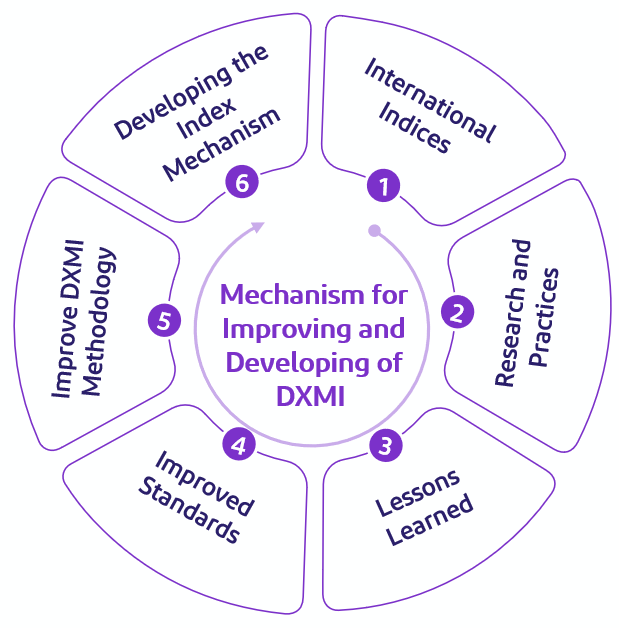
The authority is dedicated to developing the Digital Experience Maturity Index (DXMI) and improving its perspectives and themes through a a scientific and organized mechanism involving stages of research and refinement and in accordance with international indicators and best practices to align with the strategic directions of the digital government and gradually achieve its goals, to focus on standards playing a fundamental role in international indices and Saudi Arabia's ranking therein, and to accelerate the pace of digital transformation in Saudi Arabia, ensuring impactful outcomes. The Mechanism for Improving includes (6) stages, as follows:
Reviewing International Indices
Studying international indices (OSI, EPI, GEMS, DARE) and their sub-standards such as: The UN, the World Bank, and the ESCWA.Review of Research Practices
Studying perspectives, themes and standards of best practices and results of local and international research.Lessons Learned from previous cycles
Drawing lessons learned from previous cycles and feedback from entities to improve the index.Determining the improved Standards
Determining a list of important standards in international indices, best practices and research results that are not included in the previous DXMI standards.Improve DXMI Methodology
Improving and updating the methodology of the DXMI and incorporating digital inclusion as a subindex.- Developing the Index Mechanism
Developing the DXMI constituents including guidelines, systems and subindex.
3.2 Criteria for Selecting Platforms Included in the Index
The targeted platforms in (2025) cycle , which is the fourth cycle for the Index, were selected based on the following criteria:
- The importance of the platform in the sector it serves.
- The influence of the platform on international indices.
- The diversity of sectors served by the platform.
- The volume of interactions about the platform in the social media.
- The volume of services and operations in the platform.
- Platform connectivity with major life journeys needed by various beneficiaries in the Kingdom.
- The number of beneficiaries of the platform and the diversity of their segments.
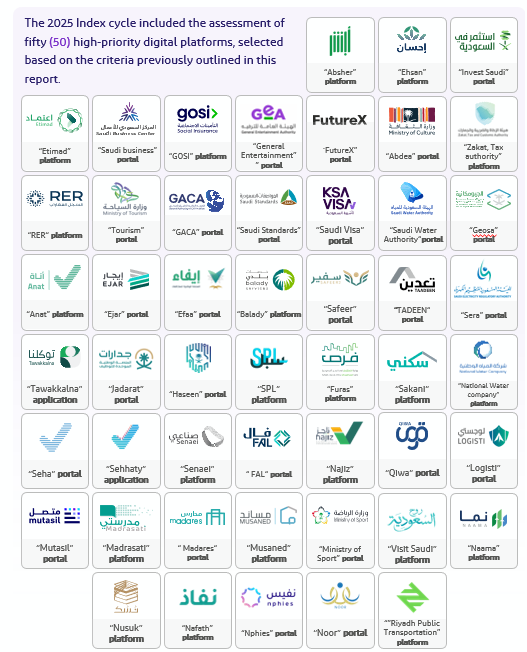
The targeted digital platforms in the 2025 index were classified according to the digital channels they offer to their beneficiaries, based on the "Definitions of Digital Platforms, Products, and Services" issued by DGA. It is referred to as a 'portal' if its services are offered exclusively through a digital portal, and as an ‘application' if its services are provided through a smart-device application. Platforms that offer services through both digital channels are referred to in this report as a 'digital platform'.
3.3 Platforms Included in the Index
4. Digital Version
For more information: Check the digital version.
Suggestions and comments
For any inquiries or comments about the services or the current page, please fill in the required information.
Add Comment